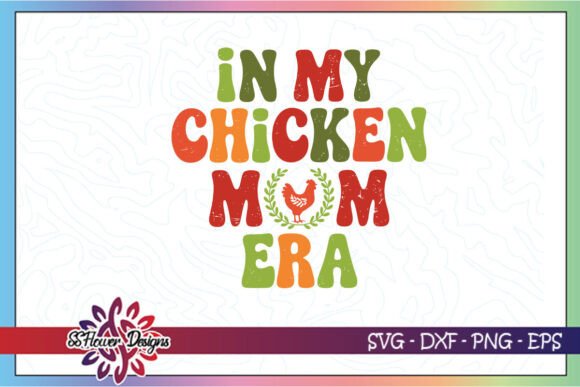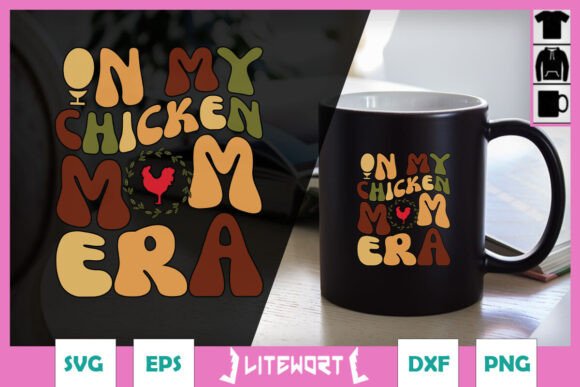
In My Chicken Mom Era Farm Mama SVG Review
As a professional embroidery digitizer and product reviewer, I approach every new graphic with a specific question: will this actually stitch out well on real fabric? When evaluating the In My Chicken Mom Era Farm Mama SVG, my focus shifts immediately from digital aesthetics to physical application. This design taps into a massive cultural moment for homesteaders and backyard flock enthusiasts, but trending phrases only sell if the execution is flawless. After importing the files and analyzing the vector paths, I can see this asset has significant potential for custom apparel and handmade products, provided you understand its structural nuances before hooping your first garment.
First Impressions and Visual Personality
The immediate mood of this graphic is playful yet grounded. It bridges the gap between modern internet culture and traditional farm life, creating a niche aesthetic that resonates deeply with today’s Etsy seller and boutique owner. The layout typically balances bold typography with illustrative elements, suggesting a design that relies heavily on clean lines rather than photorealistic shading. For an embroidery project, this is excellent news. Designs that depend on complex gradients often fail in thread; designs that rely on shape and silhouette succeed.
Visually, the In My Chicken Mom Era Farm Mama SVG feels like it belongs on unstructured, organic fabrics. It does not scream "corporate merch"; it whispers "weekend coop duty." This distinction matters because it dictates your material choices. You would not pair this with shiny performance wear. Instead, it demands textured cottons, linen blends, or heavyweight fleece. As a digital embroidery file, the SVG format included in your purchase is the gold standard for editing. Unlike raster images, these vectors allow you to adjust node points in software like Illustrator or specialized embroidery programs without losing crispness, ensuring your applique design or lettering remains sharp at any scale.
Real-World Application: The Canvas Tote Test
To truly judge this asset, I mentally placed it in a specific production scenario: a heavy-duty canvas tote bag design intended for farmers market vendors or egg sellers. In this context, the design needs to be legible from a distance and durable enough to withstand washing and abrasion.
For this application, the pre-sized nature of the file is a helpful starting point, but as a designer, I always recommend verifying dimensions against your specific hoop. If you are stitching this onto a tote, you likely want to maximize the print area. The SVG allows you to scale up confidently. However, scaling affects stitch density. If you enlarge the design by 30% for a large tote, you must ensure your digitizing software recalculates the stitch count appropriately. Otherwise, you risk gaps in satin stitch columns or overly dense areas that could needle-punch through the canvas.
I also considered how this translates to sweatshirt embroidery. On fleece, the pile of the fabric can swallow fine details. The bold nature of the "Chicken Mom" theme suggests using a thicker running stitch or a topped satin stitch to prevent the design from sinking into the fabric nap. This is where having the raw SVG is superior to a pre-digitized PES or DST file; you retain control over the underlay and top stitch parameters to suit the specific fabric texture of your blank garments.
Navigating Fabric Challenges and Technical Limits
While the In My Chicken Mom Era Farm Mama SVG is versatile, it requires careful handling on certain substrates. If you plan to use this for baby embroidery on onesies or stretchy knits, caution is mandatory. Large, dense designs on thin knit fabric cause puckering that no amount of steaming can fix. For baby items, I advise isolating specific elements of the design—perhaps just the chicken icon or a single word—rather than stitching the full phrase. This reduces tension on the garment and maintains comfort.
Dark fabrics present another variable. The high-resolution PNG included in your purchase is invaluable here. Before committing thread to fabric, overlay the transparent PNG onto photos of your dark navy or forest green blanks. Check contrast ratios. White or cream thread on dark fabric looks classic, but ensure the thread colors you select match the rustic vibe. Neon threads might technically offer contrast, but they clash with the farmhouse aesthetic. Furthermore, if the design includes intricate interior details, verify they remain visible when stitched in lighter thread on dark backgrounds; sometimes, simplifying the internal fill stitch patterns improves readability on dark goods.
Be mindful of curved surfaces like caps. Unless the design is specifically arched or segmented, placing a wide, linear phrase across the front panel of a structured cap often results in distortion at the edges. For headwear, consider rearranging the SVG elements into a stacked or circular configuration within your embroidery software before generating your machine file.
Commercial Viability and Brand Consistency
For the craft business owner, this design is more than just a cute graphic; it is a commercial asset. The inclusion of DXF files indicates compatibility with cutting machines, opening doors for mixed-media projects. Imagine offering a personalized gift set that includes both an embroidered apron and a vinyl-decaled matching mug. The consistency between the cut file and the embroidery file ensures brand cohesion across different product lines.
When listing finished items, the high-resolution PNG serves as a perfect base for printable mockups. Customers need to visualize the final result. Because the background is transparent, you can place the design over realistic garment templates without messy white boxes. This professionalism builds buyer trust. However, always double-check your licensing terms. While the file is ready for import, confirm whether your purchase allows for selling physical commercial embroidery products versus digital redistribution. Protecting your shop starts with respecting intellectual property boundaries.
Essential Designer Notes for Success
Before you run a single production piece with the In My Chicken Mom Era Farm Mama SVG, adhere to these practical protocols:
- Test Stitch on Scrap: Never assume default settings work. Run a test on the exact fabric and stabilizer combination you intend to use. A tear-away might suffice for denim, but a cut-away is non-negotiable for knits.
- Audit Small Details: Zoom in to 400% in your software. Are there anchor points too close together? Is the text height below 5mm? Tiny lettering often stitches out as a muddy line. Manually adjust spacing or increase size if necessary.
- Check Thread Contrast: View your color simulation in grayscale. If the design loses definition without color, your value contrast is too low. Adjust thread selection accordingly.
- Verify Hoop Size: Just because the file imports doesn't mean it fits your machine’s maximum field. Measure the actual stitch area, not just the bounding box, to avoid mid-design errors.
- Mockup Validation: Use the PNG to create black-and-white previews. This reveals whether the design relies too heavily on color differentiation rather than structural clarity.
- Licensing Confirmation: Explicitly verify if the license covers small shop product sales or mass production. Document this permission for your records.
Ultimately, the In My Chicken Mom Era Farm Mama SVG is a robust foundation for makers who value quality over speed. It offers the flexibility needed for professional customization while capturing a specific, marketable sentiment. By treating this graphic as a technical blueprint rather than a plug-and-play solution, you elevate your finished product from a simple craft to a premium handmade good. Whether you are creating holiday embroidery gifts or stocking your Etsy store for spring, success lies in the thoughtful translation of digital vectors into tangible thread.